Last Updated: November 5, 2026
A lawn can be firm at breakfast and too soft to push a mower across by afternoon. Watch where the first strip darkens. Water arriving from a patio edge needs a different collection point from moisture that rises through the grass across the whole low area.
Runwell Durham Drainage Company offers yard drainage in the Durham area. The starting point is your intended result. If the immediate priority is to preserve a dry walking route from the back door to the gate, say so before comparing products or agreeing to excavation.
Find the first place the ground changes
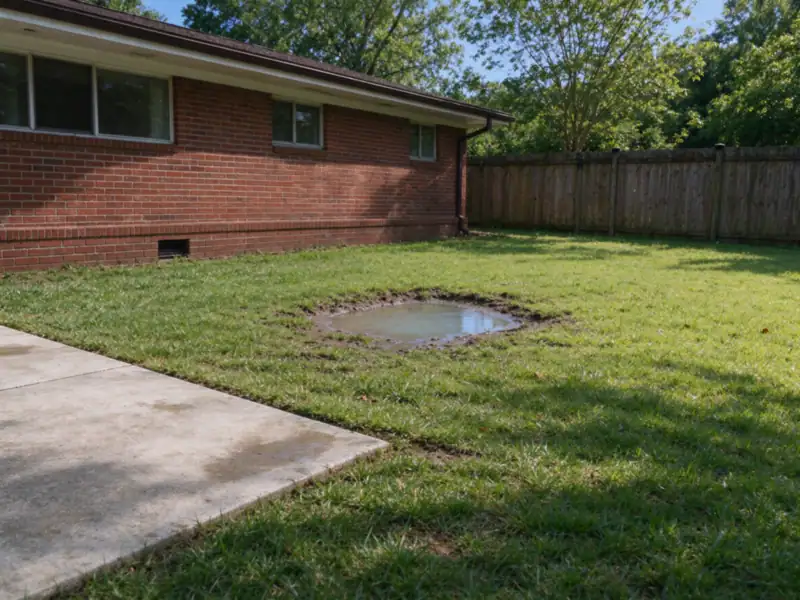
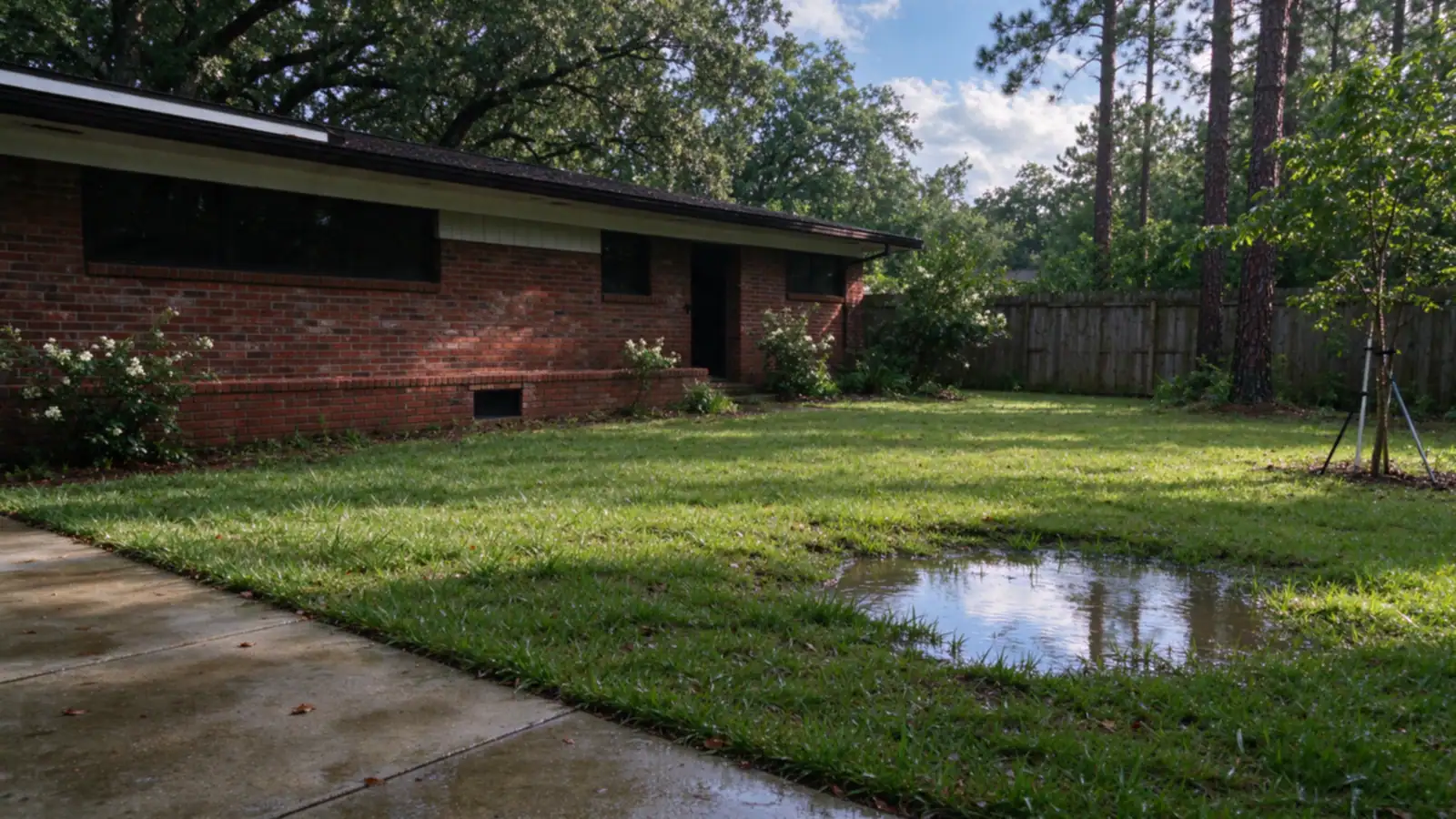
Walk from the high side of the yard toward the hollow when the ground is safe. Look at the boundary between firm and soft turf rather than standing in the middle of the mud. A concentrated ribbon starting at one patio corner suggests that the corner is collecting a much larger paved area. A uniform band of soft turf across a slope suggests a different investigation. The photograph that best explains the first pattern includes the paving edge; the best view of the second runs across the slope. Mark both on the same sketch if they occur together.
Two scopes worth comparing
Consider a property with the arc of wet turf around a patio. Compare these alternatives.
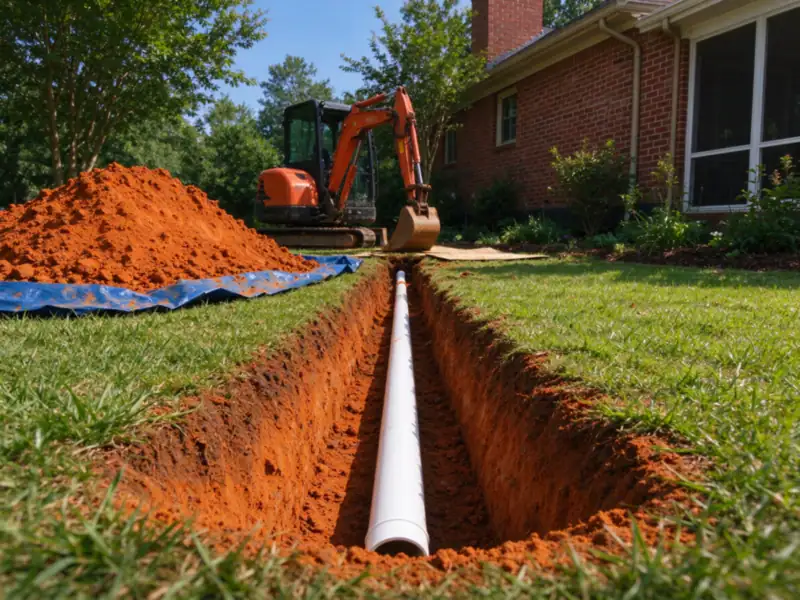
- A broad, shallow route around the sitting area.
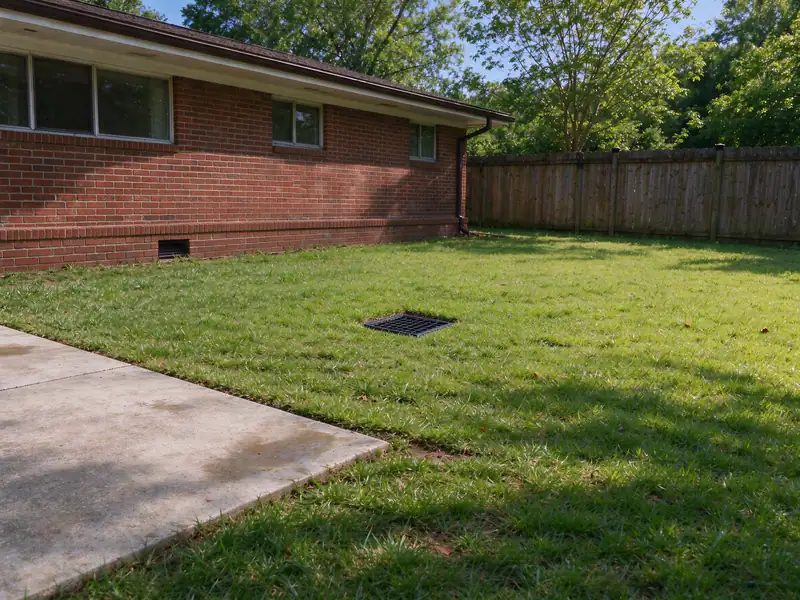
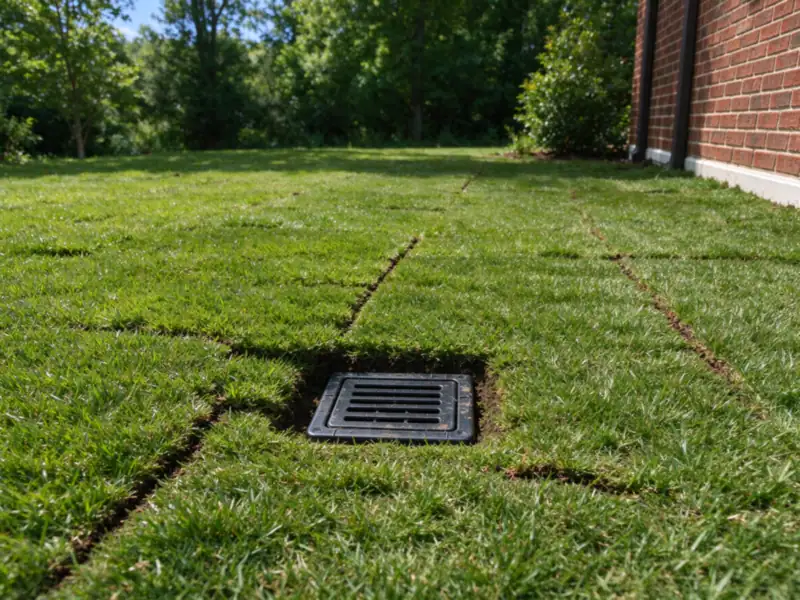
- A low-point inlet with buried conveyance.
The deciding question is whether the patio sheds a sheet of water or the soil stays wet after the pavement dries. Ask the assessor to show where each option would begin, what it would change and where its effect would end.
| What to compare | Why it matters here |
|---|---|
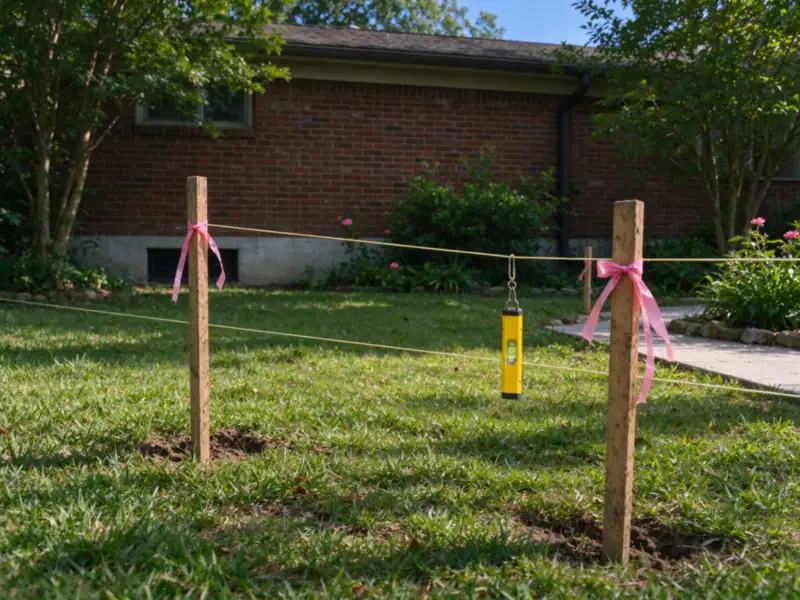
| Site evidence | Establish the elevation of the lowest usable receiving area before fixing the route. |
| Everyday use | Protect a wheelbarrow crossing that people use every day during construction and at the finished level. |
| Performance | Explain how the proposed work will help preserve a dry walking route from the back door to the gate. |
| Future care | Identify the accessible point where you can first notice an inlet sitting slightly above the lawn. |
What a useful plan leaves open
Imagine the owner wants a child to be able to walk from the porch to the gate after rain. The entire lawn does not necessarily need the same treatment. Protecting that crossing might call for moving a surface route to the outer bed or collecting water before the path. A proposal to drain the deepest part of the lawn can miss that everyday goal. Ask the contractor to draw the expected wet-weather route through the finished yard, including the place where the child would actually cross.
What to bring to the assessment
From a safe position, take a photograph showing the edge of the patio, the depression and the gate in one wide view. Mark the first place water arrives, even if the deepest puddle forms somewhere else. If you have a plan of a buried run, include the date and any later changes. A sketch of what you actually know is more useful than an apparently precise line drawn through an unverified section.
Mention it specifically if the grass stays soft uphill of the puddle. That observation changes the question the contractor needs to answer. Ask which checks can be made from the surface and which would require opening a selected area or involving another specialist. Agree what happens if the first finding points away from the installation you initially had in mind.
A narrower first phase
If a roof extension feeds the depression, separating that concentrated source can be a sensible first phase. Agree how to observe the next comparable event and which remaining symptom would justify a second phase. Avoid laying a pipe now if it will sit in the path of a later grade change.
Use the lawn as a timeline
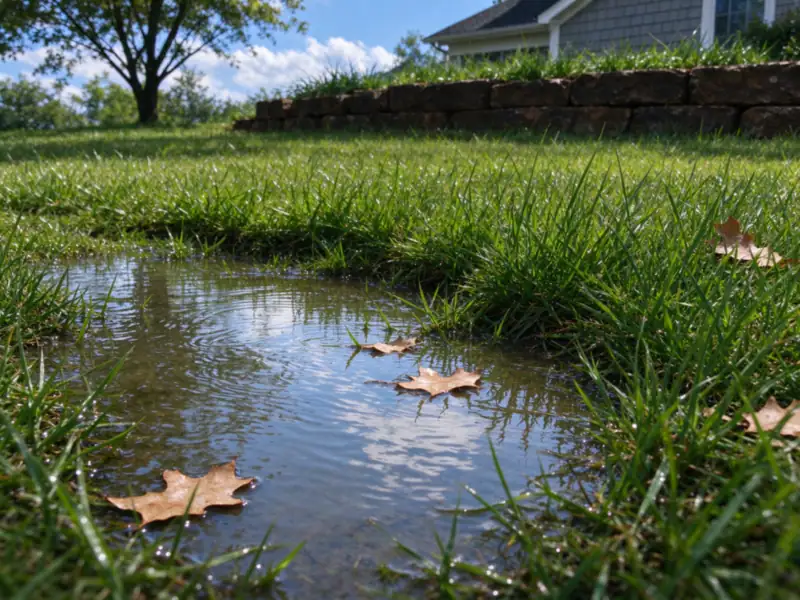
Label photographs by elapsed time after the same rain, rather than mixing a picture from the height of one storm with a dry-day picture from another week. Note the first place water appears and the last place it leaves. A surface depression often has a recognizable rim. A soft strip with no obvious rim can reflect water moving through soil. A blocked pipe can make either pattern worse. The observations help decide what to investigate without declaring the cause from appearance alone.
What a drainage quote should wait for
A trench can intercept water without stopping its production. If a leaking line is feeding the ground, treating the symptom can leave unnecessary water use, ongoing saturation and a repair still to be done. Ask which checks establish the source before authorizing an outlet route. Once a leak or irrigation issue has been addressed, allow the ground’s behavior to be reassessed before deciding whether it also has an independent drainage problem.
Read the estimate against the finished property
Ask for a written boundary around the arc of wet turf around a patio, including access rather than simply the length of the work. A price that assumes open access may change if a wheelbarrow crossing that people use every day must remain usable. Separate excavation, material handling, connections and reinstatement where they affect your choice. If part of the route depends on the elevation of the lowest usable receiving area, identify who will confirm it and when you can reconsider the scope.
Compare what you will see after a storm, not just what will be buried. A useful handoff identifies the collection point, the route and the receiving ground. Put the maintenance openings and any retained components on the same drawing. Keep it with photographs taken before backfill so a future fence, planting bed or patio does not compromise the work.
After the work
After the first rain, compare the area you wanted to use with the rest of the lawn. If the gate crossing is firm but a separate corner still ponds briefly, check whether that corner belonged to the agreed scope. If the crossing remains muddy, look upstream for flow bypassing the collection point and downstream for water backing into the route. Record those as separate observations. It is easier to evaluate the next step from the original objective than from a general impression that the yard is still wet.
Questions about this decision
Can I fill the low spot with topsoil?
Only if the finished surface sends water along a continuous route. Filling a hollow can build a dam across the only opening toward the lower lawn. Walk the whole proposed route on the plan before ordering soil.
How much of my lawn will need work?
The disturbance includes access, excavated soil and working space as well as the drain. Compare those limits with the area you want back for everyday use.
What should the assessor check at the arc of wet turf around a patio?
The immediate question is whether the patio sheds a sheet of water or the soil stays wet after the pavement dries. Follow the evidence from the upstream source to the proposed receiving area. If part of that route is concealed, ask how uncertainty affects the recommendation and whether a limited investigation could settle it.
How does the plan account for a wheelbarrow crossing that people use every day?
Show that constraint during the site discussion. Compare access while work is underway with the finished condition. A proposal can restore drainage and still leave an awkward crossing if it only specifies the buried components.
What should I report if the grass stays soft uphill of the puddle?
Note when it occurred relative to rain or a change on the property. Record the edge of the patio, the depression and the gate in one wide view. A repeated pattern is useful evidence for checking the collection method and outlet before committing to more work.
Discuss your route
Tell Runwell about the arc of wet turf around a patio, the result you want and any uncertainty about the outlet. Discuss your property or compare the items in a drainage estimate. For the two decisions most closely connected to this work, see Why Does Water Stay in My Yard After Rain? and Why Is My Yard Wet When It Hasn’t Rained?