Last Updated: November 5, 2026
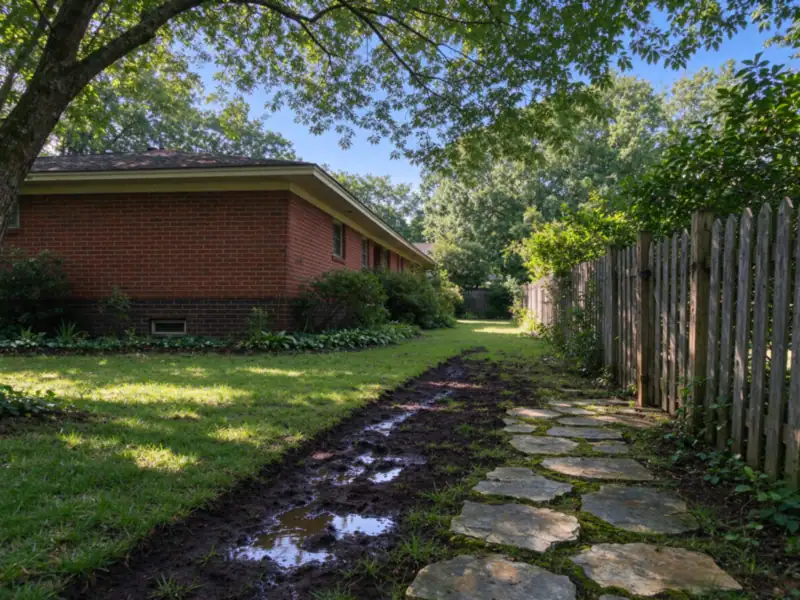
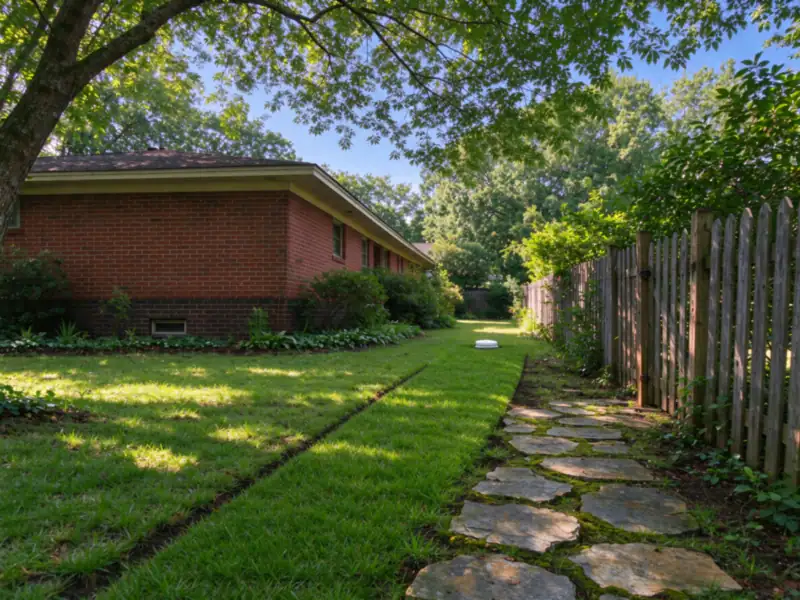
A yard that stays soft after the puddles disappear may need more than a grate at the surface. A French drain can intercept water moving through the ground and carry it toward a suitable outlet. The important question is whether that is the water keeping your yard wet.
Runwell Durham Drainage Company offers French drain installation for properties where subsurface collection fits the problem. If runoff is rushing across a patio or collecting in one hollow, a surface inlet or a change to the grade may do more useful work. You should understand that choice before paying for a trench.
What happens on the first visit?
The assessment starts with what you want back: a usable lawn, a drier route beside the house, or relief from a persistently saturated bed. Point out where wetness begins, how far it spreads and whether it continues in dry weather. Those details help distinguish rain-driven seepage from irrigation or a possible water-line problem.
The proposed route then needs levels, an accessible receiving area and an understanding of the ground between them. A green lawn can conceal shallow utilities, old drainage, imported fill or roots that limit excavation. Measurements and observations should lead to a recommendation, rather than a predetermined pipe depth applied to every property.
Ask which checks are included in the visit and whether any further investigation is a separate scope. Visible conditions do not establish everything underground. If the outlet cannot be confirmed, that uncertainty belongs in the proposal before installation is agreed.
A collection trench and an outlet do different jobs
How the water gets in
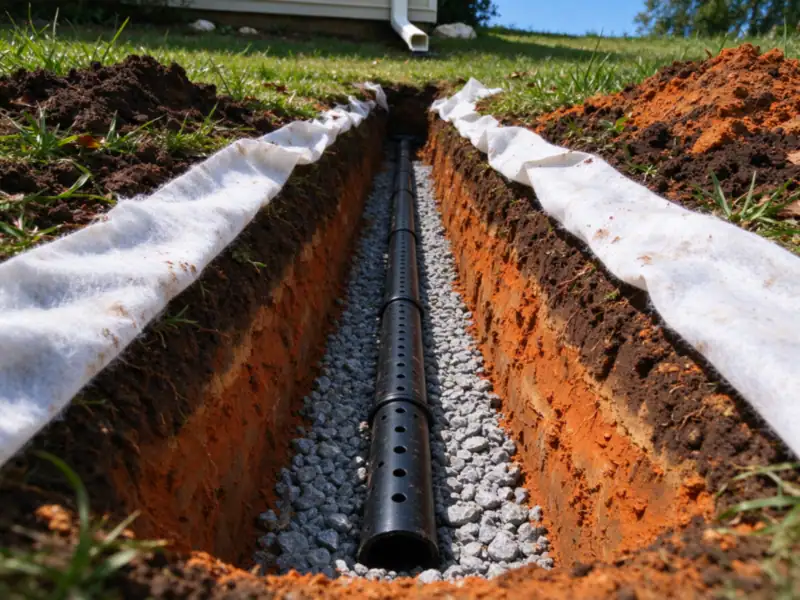
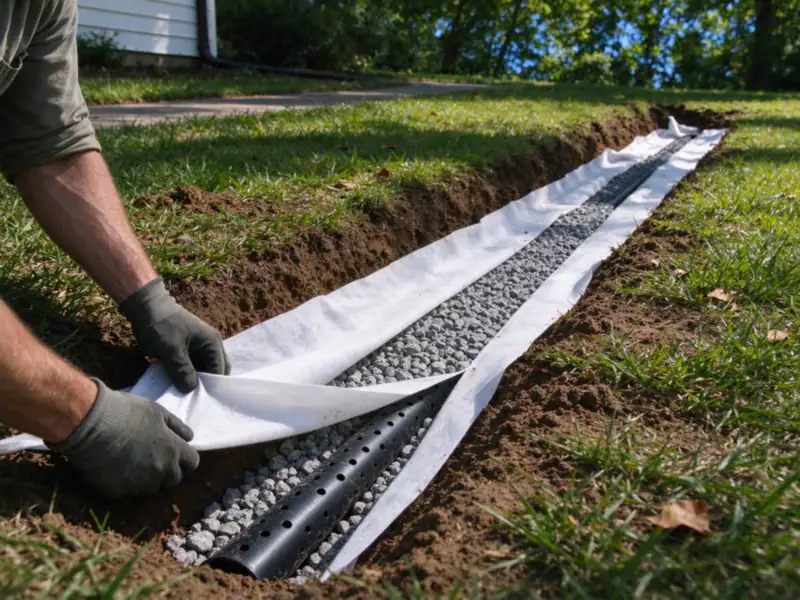
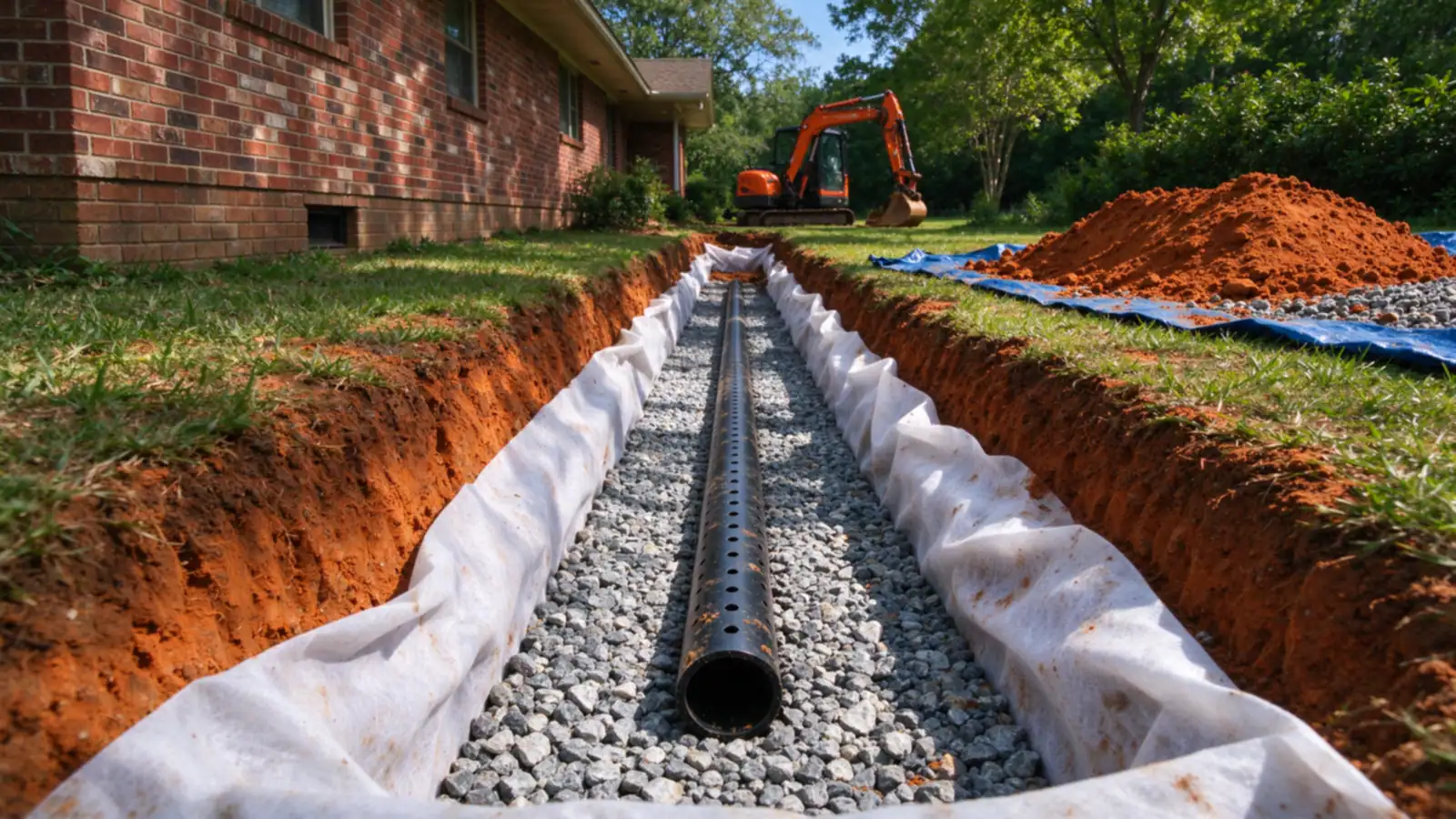
A French drain uses permeable drainage aggregate around a perforated collection pipe. Water enters from the surrounding ground, moves through the stone and enters the pipe. Filter fabric is selected and arranged to limit soil migration while allowing water through. The whole assembly matters: a perforated pipe laid directly in unsuitable soil is not equivalent to a properly specified collection trench.
The trench must intersect the water being addressed. A curtain drain is an intercepting arrangement, often placed across the route of subsurface flow before it reaches the area you want to protect. That is a placement decision, not a separate cure for every wet slope. Making the trench deeper without understanding the water path can add disturbance without improving interception.
How the water gets out
Once water is collected, it still needs a route to a suitable destination. Solid conveyance pipe can carry it beyond the collection area without deliberately releasing it along the way. The transition, fall, fittings and receiving conditions must work together. A pipe that ends below a regularly flooded outlet may not provide the relief you expect.
An outlet emitter does not make an unsuitable discharge point suitable. Consider whether water can spread without cutting into soil, returning toward the house or creating a problem next door. Keep the end accessible so grass, leaves and later landscaping do not hide it.
Choose the work that matches how water arrives
| What you observe | Option worth assessing | What it will not settle by itself |
|---|---|---|
| Broad ground saturation after rain | French drain or intercepting curtain drain | Whether a workable outlet exists |
| Fast runoff converging on a low point | Surface inlet and conveyance | Subsurface water beyond the inlet |
| Ground slopes toward the wet area | Grading or a shallow surface route | Water entering from deeper ground |
| An old system worked until recently | Cleaning or a focused repair | An unsuitable original layout |
Some properties need a combination, but combining systems should have a reason. Sending concentrated roof water into a perforated collection trench can put more water into the ground you are trying to relieve. A separate solid route may be appropriate, with any connection checked for its effect on the rest of the system.
If a buried drain already exists, begin with what can be retained. Accessible blockage, a disconnected fitting or a buried outlet may support a narrower repair. Repeated soil entry, widespread pipe damage or a route that cannot discharge can justify replacement. The distinction should be explained, not hidden inside a blanket replacement price.
Clay changes the question, not just the excavation
NC Geological Survey describes clay-rich Triassic soils that transmit water slowly in parts of the region. That does not diagnose your lot. Soil layers and fill vary, and the proposed collection depth may encounter different material from the surface.
The practical distinction is between collecting water and expecting the ground to absorb it. A French drain with a viable discharge route addresses collection and conveyance. A stone-filled hole with no outlet depends on infiltration and storage. If the surrounding ground cannot accept the incoming water, making that hole larger may only delay its filling.
For that reason, discuss a dry well or other infiltration feature only after its site suitability has been established. Setbacks, groundwater and overflow also affect the choice. The whole-property drainage guide explains how these pieces fit without treating clay as a universal answer.
Settle access and the finish before digging
A route that looks short on a drawing may cross a narrow gate, a paved walk or established planting. Equipment access can change excavation methods, soil handling and the area disturbed beyond the trench itself. Utility locations and privately installed lines need attention before ground is opened. Do not use a drainage sketch as a substitute for locating buried services.
Tree roots and building foundations deserve particular care. Avoid assuming that a deeper trench is harmless beside either one. Where the drainage objective conflicts with structural support or significant roots, the route or scope may need to change and another qualified specialist may be needed.
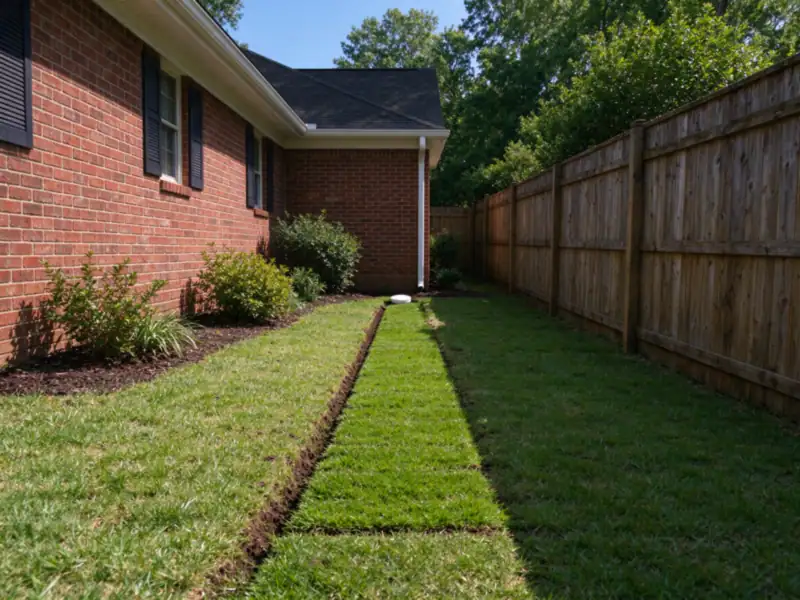
The written scope should identify how excavated soil is handled, whether material leaves the property, and which turf, beds or paving are restored. Grass establishment takes care after installation; an agreement to backfill a trench is not automatically an agreement to replace an entire lawn. Ask what finish you are comparing between estimates.
Bring a useful starting point
If you are considering a French drain, note where the ground first becomes wet and whether you can identify an existing outlet. Include access constraints and your preferred finish when you discuss an estimate. Those details help frame the decision; photographs alone cannot establish underground conditions or final levels.
What belongs in the installation scope?
- The wet area and water source the work is intended to address.
- Collection alignment, depth basis, aggregate, filter arrangement and pipe specification.
- Conveyance route, outlet conditions and any permissions still needed.
- Accessible maintenance points and how their locations will be recorded.
- Excavation access, utility coordination, soil handling and restoration.
Runwell manages exterior drainage work fulfilled by licensed and insured contractors. Any trade license required for the permitted scope must match that work. Exterior drainage does not include a promise to correct structural movement or provide interior waterproofing.
Where a proposed route affects Durham city right-of-way, confirm the required review before assuming a street connection is available. Private boundaries, easements and receiving-property conditions also matter. They can alter the route and timing, so resolve them before treating the drawing as ready for construction.
Cost follows the route and the work around it
Compare complete scopes rather than a price per foot alone. Depth, access, disposal, aggregate, fittings, hardscape crossings and restoration can change the work substantially. A short difficult crossing may add more complexity than a longer accessible lawn route. No installed price is meaningful without saying what is included.
The Durham drainage cost guide gives you a way to compare those decisions. Ask for exclusions and allowances to be identified, especially when the outlet or hidden condition remains uncertain. That lets you decide whether further investigation is worth doing before committing to installation.
Questions about this installation
Does a French drain need to run around the entire yard?
No. Its alignment should intercept the water causing the problem. An unnecessarily long trench increases disturbance and restoration without necessarily improving the result. The water path, collection level and outlet determine the useful extent.
Can the collection pipe also carry my downspout water?
Do not assume the two belong together. Roof runoff is concentrated water that needs conveyance; a perforated collection trench admits groundwater. Any connection needs an assessment of capacity and the possibility of releasing roof water into the wet ground.
Is deeper always better for an intercepting drain?
No. The trench needs to meet the relevant water path while respecting utilities, roots, structures and its outlet level. A deeper trench can be more disruptive and still miss the cause. There is no universal depth that suits every Durham property.
Should filter fabric wrap only the pipe?
The filter arrangement should be specified for the soil and drainage assembly. A pipe sleeve alone does not prevent surrounding aggregate from filling with migrating soil. Ask how the proposed detail keeps the collection space permeable and maintainable.
What should I keep after the trench is covered?
Keep the route, component specification, outlet location and maintenance access information with your property records. Photos taken before backfilling can help later landscaping avoid the drain. Ask what visible parts need checking and what symptoms should prompt further assessment.
Continue planning
Start with the property-wide decisions if the source remains uncertain. For a known collection route, use the cost and scope comparison to prepare questions. For a property outside the city, the Durham County page explains why the responsible authority matters.