Last Updated: November 5, 2026
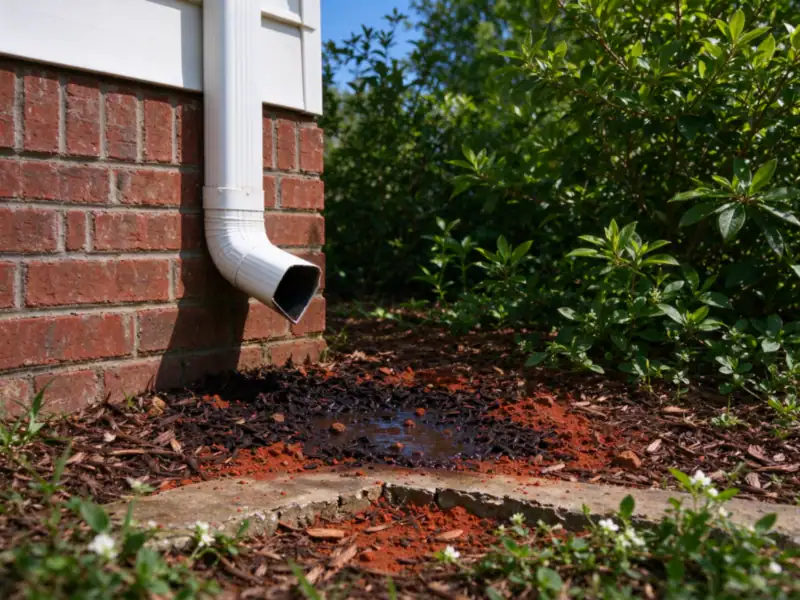
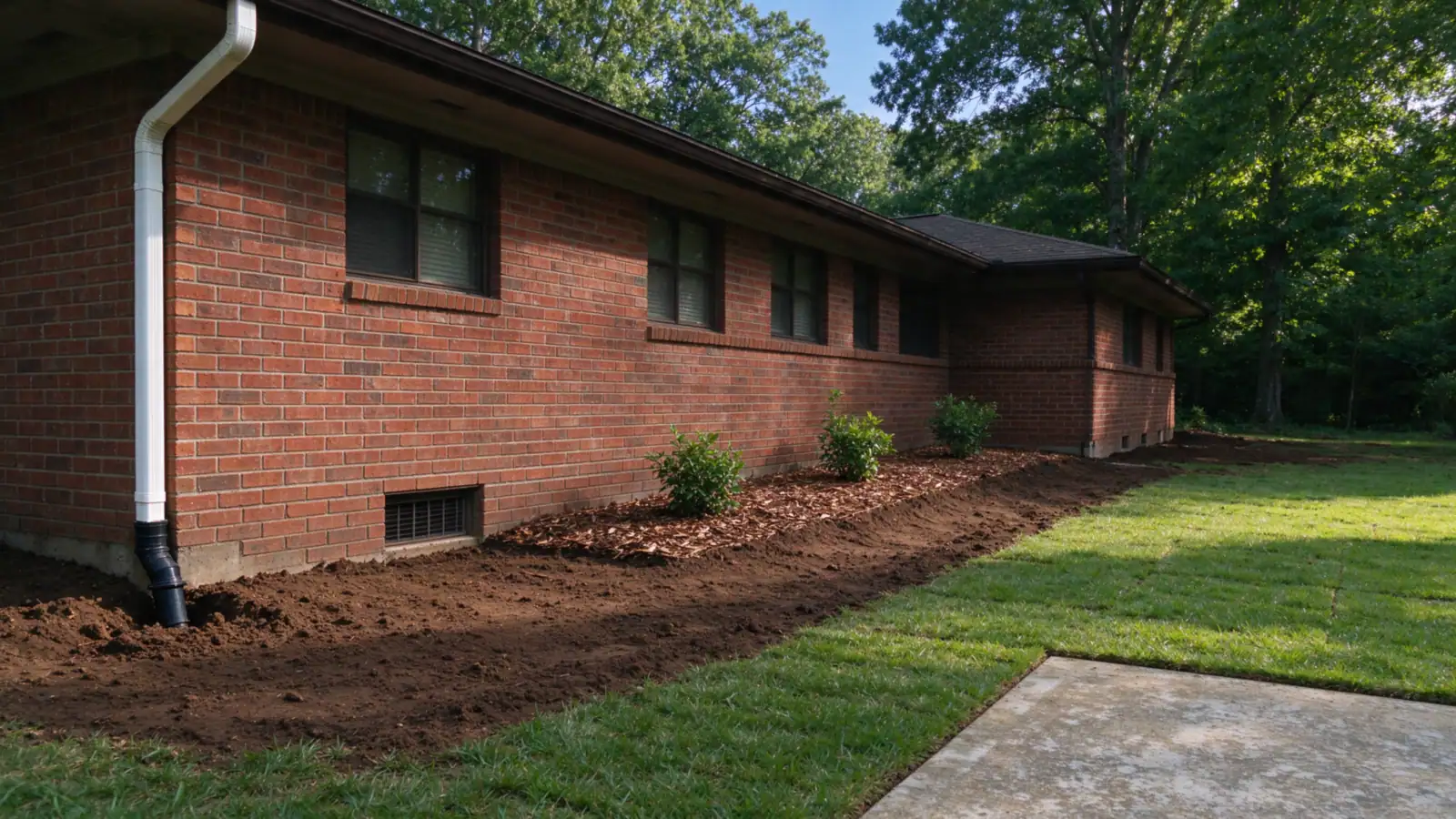
Water at the bottom of a wall does not identify its source. Look up at the roof elbow, sideways at adjoining paving and uphill at the lawn before discussing excavation alongside the building. Each source calls for a different way of keeping outside water away.
Runwell Durham Drainage Company offers exterior foundation drainage in the Durham area. The starting point is your intended result. If the immediate priority is to reduce exterior water loading at the affected wall, say so before comparing products or agreeing to excavation.
Keep the outside diagnosis specific
A damp patch inside can have more than one cause. On the exterior, the relevant observations are where rain first reaches the wall, whether it ponds, and what prevents it from moving away. A flower bed can receive runoff from a paved path as well as the downspout above it. Trace each visible contribution. Agree what change in the outside pattern would count as a successful drainage improvement without treating that improvement as a building waterproofing warranty.
Two scopes worth comparing
Consider a property with a wet band of soil against an exterior wall. Compare these alternatives.
- Redirect concentrated roof water and correct nearby surface levels.
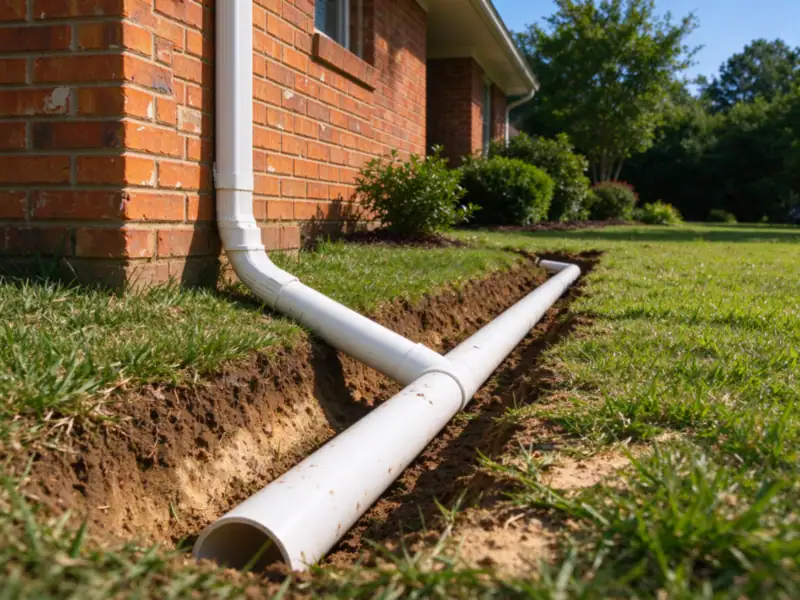
- Assess deeper exterior interception where site and building conditions support it.
The deciding question is whether water arrives visibly during rain or persists within the ground. Ask the assessor to show where each option would begin, what it would change and where its effect would end.
| What to compare | Why it matters here |
|---|---|
| Site evidence | Establish foundation details and the clearance at wall openings before fixing the route. |
| Everyday use | Protect a narrow side passage occupied by utilities during construction and at the finished level. |
| Performance | Explain how the proposed work will help reduce exterior water loading at the affected wall. |
| Future care | Identify the accessible point where you can first notice an extension ending in the same saturated bed. |
Plan around the building detail
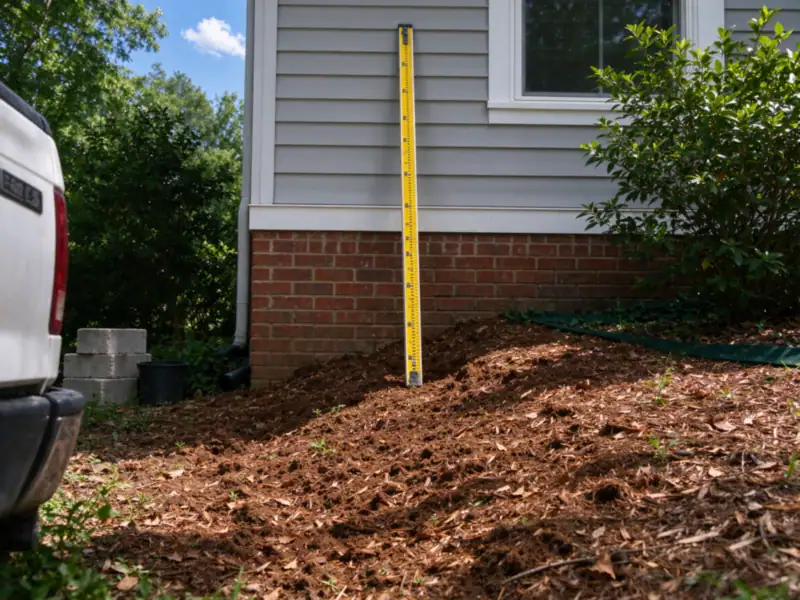
Excavation beside a house deserves more scrutiny than an open lawn trench. Locate known services, protect access and avoid assumptions about footings or buried waterproofing. If the design depends on reaching or altering a building component, establish which specialist owns that scope before accepting an exterior drainage quote. The same applies where visible movement, cracks or persistent indoor entry suggest an assessment of the structure or enclosure.
What to bring to the assessment
From a safe position, take a photograph showing the wall base, roof-water discharge and adjoining ground. Mark the first place water arrives, even if the deepest puddle forms somewhere else. If you have a plan of a buried run, include the date and any later changes. A sketch of what you actually know is more useful than an apparently precise line drawn through an unverified section.
Mention it specifically if interior dampness continues in dry weather. That observation changes the question the contractor needs to answer. Ask which checks can be made from the surface and which would require opening a selected area or involving another specialist. Agree what happens if the first finding points away from the installation you initially had in mind.
Check the new destination
Routing water around a corner can leave it at another side of the same foundation. Follow the route until it reaches stable ground that can accept the flow. Include the downstream wall, neighbor boundary and walking surfaces in the review.
Work around the perimeter on a sketch
Put each roof outlet, paved edge, low bed and known drain on the same drawing. Mark where the ground falls back toward the wall and where water would go if the nearest outlet were extended. This can reveal two sources arriving at one area, or one source moving around the corner to a second wall. It also shows whether the proposed receiving area is still within the same low pocket around the building.
What a drainage quote should wait for
A trench can intercept water without stopping its production. If a leaking line is feeding the ground, treating the symptom can leave unnecessary water use, ongoing saturation and a repair still to be done. Ask which checks establish the source before authorizing an outlet route. Once a leak or irrigation issue has been addressed, allow the ground’s behavior to be reassessed before deciding whether it also has an independent drainage problem.
Read the estimate against the finished property
Ask for a written boundary around a wet band of soil against an exterior wall, including access rather than simply the length of the work. A price that assumes open access may change if a narrow side passage occupied by utilities must remain usable. Separate excavation, material handling, connections and reinstatement where they affect your choice. If part of the route depends on foundation details and the clearance at wall openings, identify who will confirm it and when you can reconsider the scope.
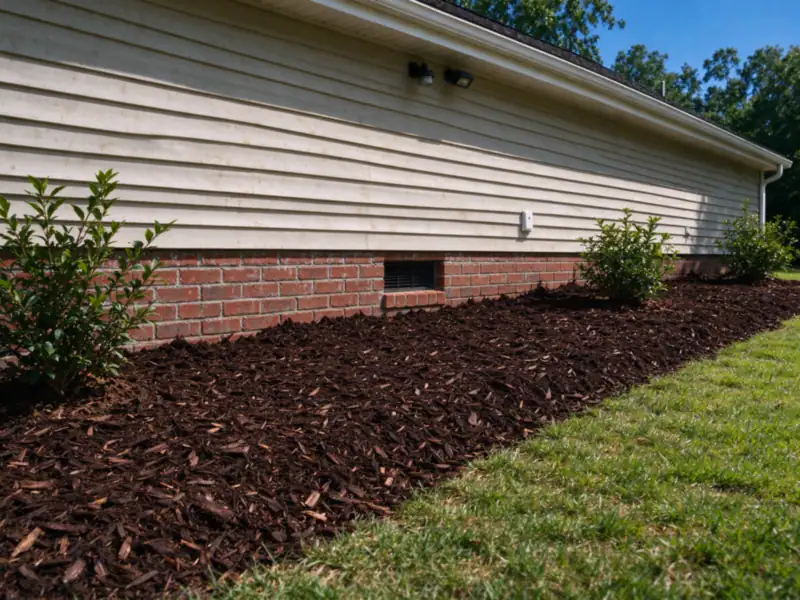
Compare what you will see after a storm, not just what will be buried. A useful handoff identifies the collection point, the route and the receiving ground. Put the maintenance openings and any retained components on the same drawing. Keep it with photographs taken before backfill so a future fence, planting bed or patio does not compromise the work.
After the work
Keep outside and inside observations in separate columns. Outside, note whether water reaches the wall, how long it stays and where the new discharge goes. Inside, record the location and timing of any moisture you already observe safely. Improvement outside can be meaningful even if a separate enclosure issue remains. Conversely, one dry interior day does not establish that an exterior route performs during a prolonged storm. This record helps a drainage contractor and a building specialist discuss their respective scopes without asking one system to prove the condition of the other.
Questions about this decision
Will exterior drainage repair a cracked wall?
Managing runoff can address the outside water source. Structural movement, cracks and water entry through the building envelope require their own qualified assessment.
Is digging beside a footing always necessary?
No. A roof outlet or surface slope may be the first issue to correct. Any excavation near support elements needs a scope appropriate to the building and ground.
What should the assessor check at a wet band of soil against an exterior wall?
The immediate question is whether water arrives visibly during rain or persists within the ground. Follow the evidence from the upstream source to the proposed receiving area. If part of that route is concealed, ask how uncertainty affects the recommendation and whether a limited investigation could settle it.
How does the plan account for a narrow side passage occupied by utilities?
Show that constraint during the site discussion. Compare access while work is underway with the finished condition. A proposal can restore drainage and still leave an awkward crossing if it only specifies the buried components.
What should I report if interior dampness continues in dry weather?
Note when it occurred relative to rain or a change on the property. Record the wall base, roof-water discharge and adjoining ground. A repeated pattern is useful evidence for checking the collection method and outlet before committing to more work.
Discuss your route
Tell Runwell about a wet band of soil against an exterior wall, the result you want and any uncertainty about the outlet. Discuss your property or compare the items in a drainage estimate. For the two decisions most closely connected to this work, see How Can I Keep Runoff Away From My Foundation? and Why Is My Yard Wet When It Hasn’t Rained?