Last Updated: November 5, 2026
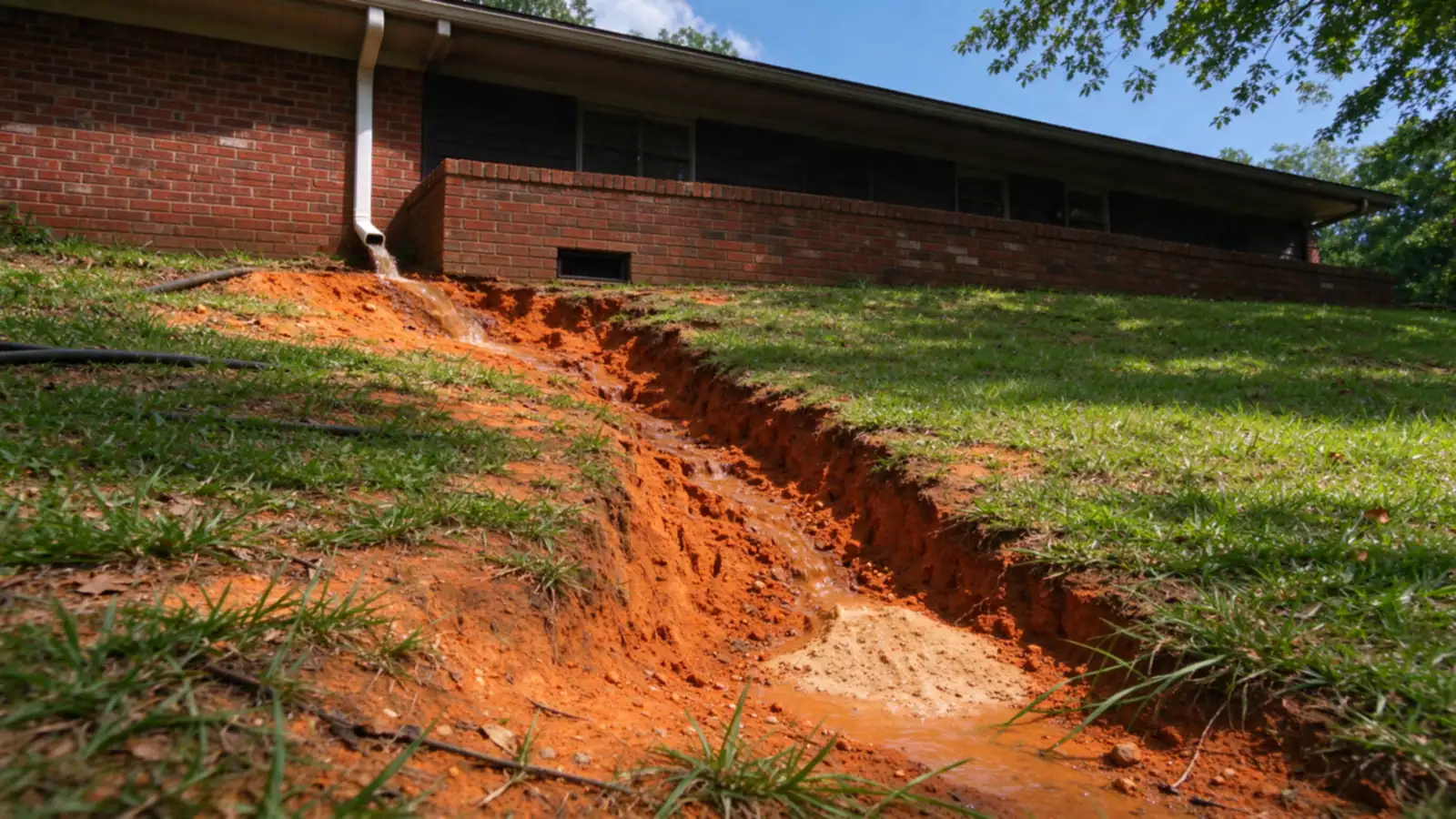
Loose soil at the bottom of a slope tells you where material landed. The repair starts farther up, where water acquired enough concentration to carry it away. Covering the bare patch can look tidy until the next discharge follows the same groove.
Runwell Durham Drainage Company offers erosion and runoff control in the Durham area. The starting point is your intended result. If the immediate priority is to keep soil in place while new vegetation establishes, say so before comparing products or agreeing to excavation.
Read the head of the erosion groove
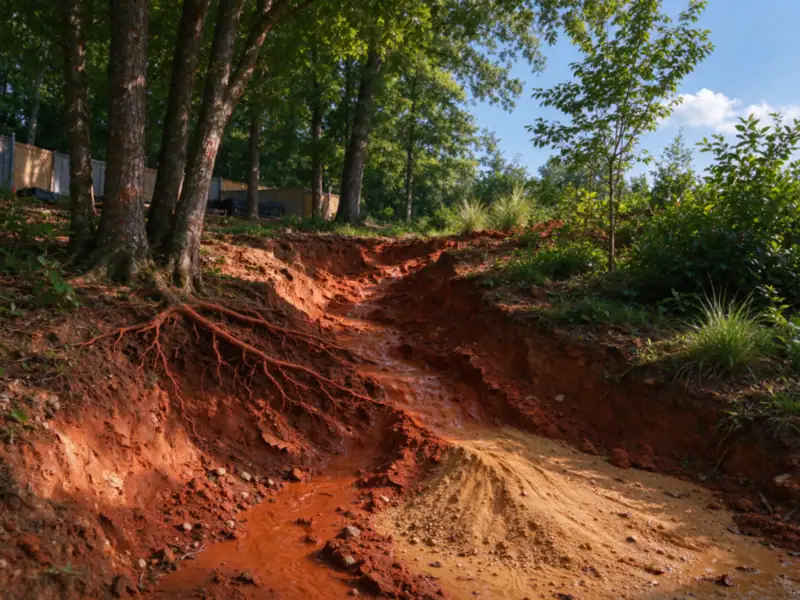
Follow the groove uphill on safe ground. A defined starting point below a pipe suggests concentrated discharge. A widening patch of bare soil on a slope can involve disturbed cover or a surface path that has narrowed over time. A sediment pile downhill marks the resting place of soil, not necessarily the point where a repair belongs. Establish the source before buying stone, bringing in soil or replacing plants.
Two scopes worth comparing
Consider a property with a narrow scour below a concentrated outlet. Compare these alternatives.
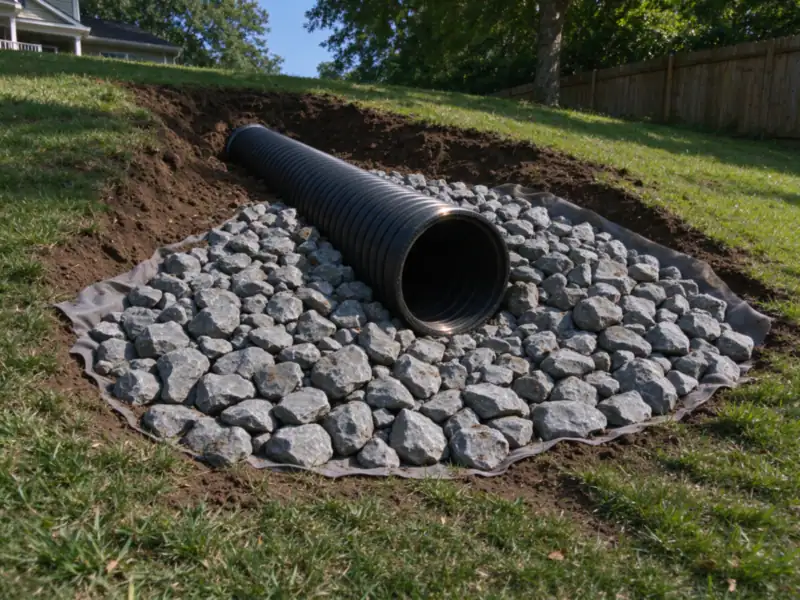
- Reduce or spread the upstream discharge.
- Stabilize the receiving area after the flow path is controlled.
The deciding question is whether the groove starts at a pipe end, bare slope or pavement edge. Ask the assessor to show where each option would begin, what it would change and where its effect would end.
| What to compare | Why it matters here |
|---|---|
| Site evidence | Establish the condition and ownership of the land receiving the flow before fixing the route. |
| Everyday use | Protect a disturbed slope that will remain exposed during restoration during construction and at the finished level. |
| Performance | Explain how the proposed work will help keep soil in place while new vegetation establishes. |
| Future care | Identify the accessible point where you can first notice stone placed over an active washout without support. |
Protect the transition
Where a pipe releases a concentrated stream into a flatter area, the transition can be the weakest part of the route. If protection ends abruptly on soft soil, erosion may simply start at the far edge. Consider the width over which water can spread and the condition of the receiving ground during a storm. The appropriate detail depends on the flow and site, especially near a watercourse or other regulated feature.
What to bring to the assessment
From a safe position, take a photograph showing the start of the groove as well as the deposited sediment. Mark the first place water arrives, even if the deepest puddle forms somewhere else. If you have a plan of a buried run, include the date and any later changes. A sketch of what you actually know is more useful than an apparently precise line drawn through an unverified section.
Mention it specifically if the scour moves to the edge of a newly armored patch. That observation changes the question the contractor needs to answer. Ask which checks can be made from the surface and which would require opening a selected area or involving another specialist. Agree what happens if the first finding points away from the installation you initially had in mind.
Put restoration in the sequence
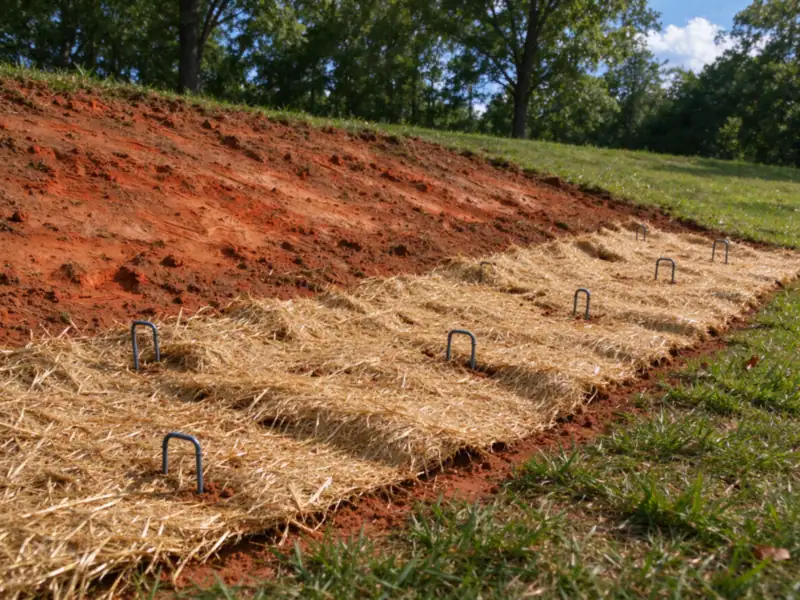
Fresh grading that directs water correctly can still lose soil before vegetation establishes. Ask how exposed ground is protected between excavation and a stable finish. Include access areas, temporary soil storage and the path taken by water during construction.
The outlet can control the entire upstream route
Two points that look downhill from the porch may be nearly level once the inlet is set below the turf. The pipe needs room for the collection fitting and its entire run, not just a lower patch of visible ground. The receiving water level matters too. An outlet covered during rain can restrict flow when the system is most needed. Ask for the route to be checked under the conditions you actually want to improve.
Compare a private improvement with a shared change
A collector entirely on your side may be practical if it has a suitable receiving area. A plan that relies on excavation next door, connecting to a shared facility or changing a roadside ditch has a different authorization path. Ask for the private portion and the conditional portion to be identified separately. This helps avoid committing money to a trench whose essential final connection has not been agreed.
Read the estimate against the finished property
Ask for a written boundary around a narrow scour below a concentrated outlet, including access rather than simply the length of the work. A price that assumes open access may change if a disturbed slope that will remain exposed during restoration must remain usable. Separate excavation, material handling, connections and reinstatement where they affect your choice. If part of the route depends on the condition and ownership of the land receiving the flow, identify who will confirm it and when you can reconsider the scope.
Compare what you will see after a storm, not just what will be buried. A useful handoff identifies the collection point, the route and the receiving ground. Put the maintenance openings and any retained components on the same drawing. Keep it with photographs taken before backfill so a future fence, planting bed or patio does not compromise the work.
After the work
After stabilization, look at the upper edge of the treated area and the first stretch of ground below it. Sediment accumulating above a protection detail can divert water around it. A new groove just below the finish can mean the concentrated flow was moved rather than spread. Record any change before replacing plants or adding loose stone. Ask who maintains the temporary soil protection while roots establish and when it can be removed. The maintenance task is different once the surface is stable, but the receiving ground still needs observation.
Questions about this decision
Will stone alone stop an erosion groove?
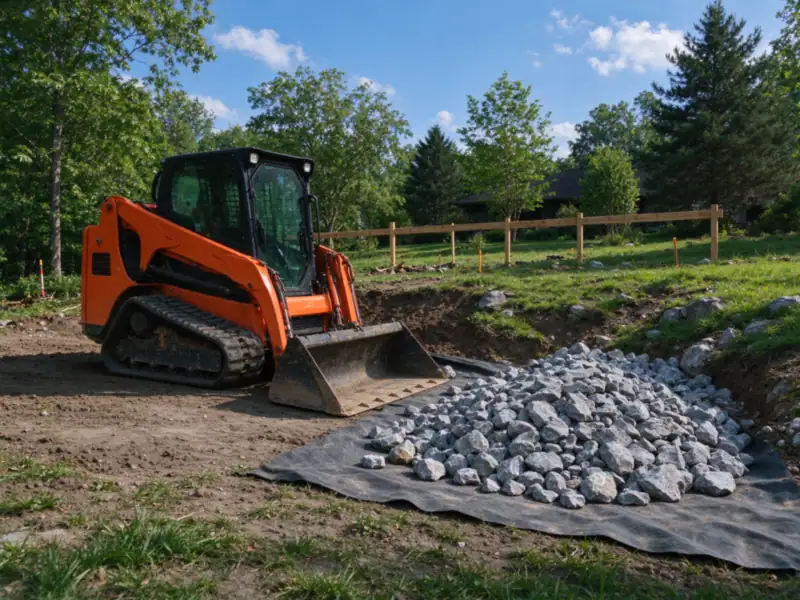
Stone can protect a suitable outlet, but concentrated water may simply cut around or below an undersized protected area. Check the source, transition and receiving ground together.
Does erosion near a creek need a different scope?
Watercourse and buffer conditions can affect what work may be done. Identify the receiving feature and confirm applicable review before proposing disturbance.
What should the assessor check at a narrow scour below a concentrated outlet?
The immediate question is whether the groove starts at a pipe end, bare slope or pavement edge. Follow the evidence from the upstream source to the proposed receiving area. If part of that route is concealed, ask how uncertainty affects the recommendation and whether a limited investigation could settle it.
How does the plan account for a disturbed slope that will remain exposed during restoration?
Show that constraint during the site discussion. Compare access while work is underway with the finished condition. A proposal can restore drainage and still leave an awkward crossing if it only specifies the buried components.
What should I report if the scour moves to the edge of a newly armored patch?
Note when it occurred relative to rain or a change on the property. Record the start of the groove as well as the deposited sediment. A repeated pattern is useful evidence for checking the collection method and outlet before committing to more work.
Discuss your route
Tell Runwell about a narrow scour below a concentrated outlet, the result you want and any uncertainty about the outlet. Discuss your property or compare the items in a drainage estimate. For the two decisions most closely connected to this work, see Where Can Yard Drainage Water Go in Durham? and What Can I Do About Runoff Crossing My Yard?