Last Updated: November 5, 2026
A buried chamber can hide stored rainwater, but storage is only half the job. Where does the water go before the next storm? If the surrounding ground stays saturated, an empty-looking lawn can conceal a chamber that has little room left.
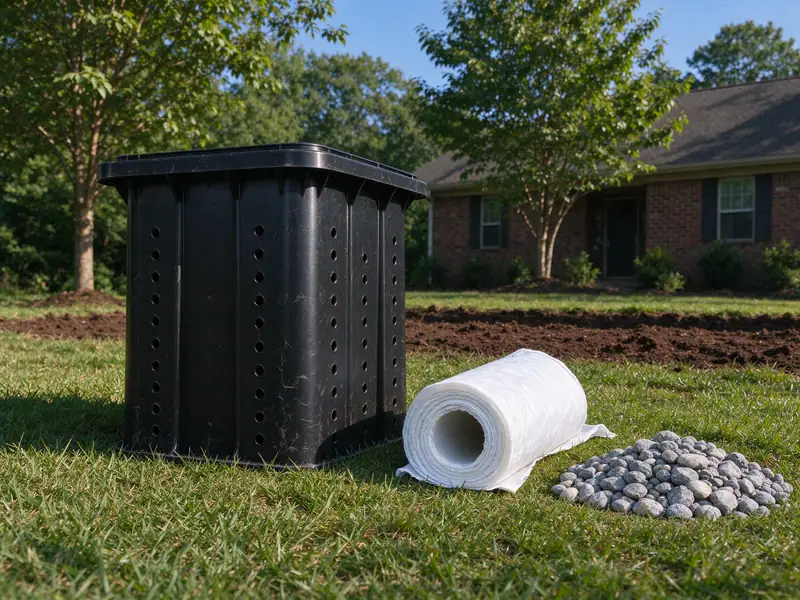
Runwell Durham Drainage Company offers dry well installation in the Durham area. The starting point is your intended result. If the immediate priority is to store roof runoff without returning it to the building, say so before comparing products or agreeing to excavation.
Distinguish space underground from capacity in the soil
The chamber holds a volume of water temporarily. The surrounding soil must then accept that water. Two chambers of the same size can behave differently because the soil at their installation depth differs. A site can also have enough storage for one shower but too little time to empty before the next. Ask what evidence supports the proposed location and how the system behaves when the storage is already full.
Two scopes worth comparing
Consider a property with a possible infiltration area beyond a roof downspout. Compare these alternatives.
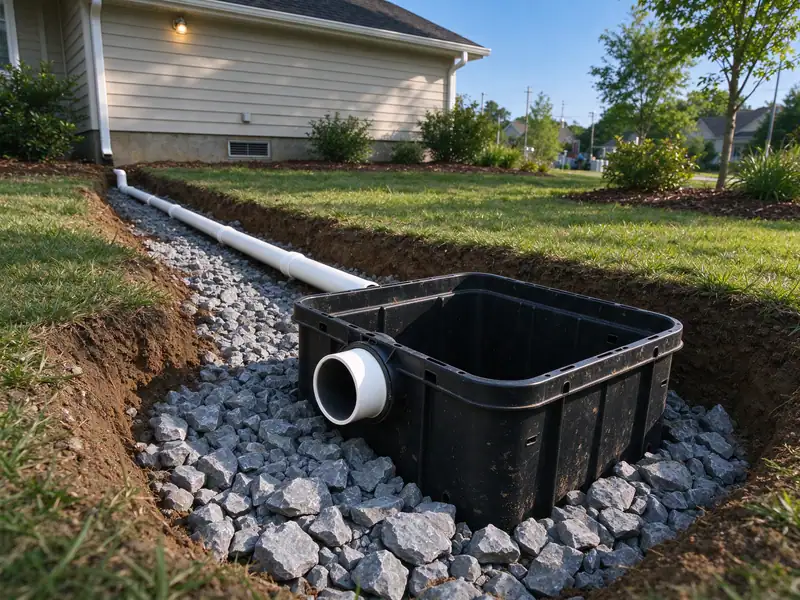
- An underground storage chamber with a suitable overflow.
- Positive conveyance to an acceptable outlet.
The deciding question is whether the soil can accept repeated inflow at the proposed installation depth. Ask the assessor to show where each option would begin, what it would change and where its effect would end.
| What to compare | Why it matters here |
|---|---|
| Site evidence | Establish groundwater, setbacks and the site’s demonstrated infiltration conditions before fixing the route. |
| Everyday use | Protect limited access for excavation and removal of excess soil during construction and at the finished level. |
| Performance | Explain how the proposed work will help store roof runoff without returning it to the building. |
| Future care | Identify the accessible point where you can first notice an inlet delivering sediment into the storage area. |
Protect the intake from sediment
A dry well receiving roof runoff has a different debris load from one receiving muddy yard flow. Fine soil carried into a chamber or its surrounding stone can reduce useful space and impair the path into the ground. Discuss how incoming material is managed, where inspection is possible and how later landscape work will avoid compacting or disturbing the area. Placing storage out of sight does not remove the need for a maintenance plan.
What to bring to the assessment
From a safe position, take a photograph showing the proposed footprint, nearby buildings and overflow direction. Mark the first place water arrives, even if the deepest puddle forms somewhere else. If you have a plan of a buried run, include the date and any later changes. A sketch of what you actually know is more useful than an apparently precise line drawn through an unverified section.
Mention it specifically if water remains in the system when the next shower begins. That observation changes the question the contractor needs to answer. Ask which checks can be made from the surface and which would require opening a selected area or involving another specialist. Agree what happens if the first finding points away from the installation you initially had in mind.
Compare overflow with the original problem
If overflow from the proposed system returns to the same low point beside the house, the improvement may fail under precisely the conditions you care about. Identify a suitable overflow destination before comparing chamber sizes or deciding how much lawn to disturb.
Why a planting hole can behave like a bowl
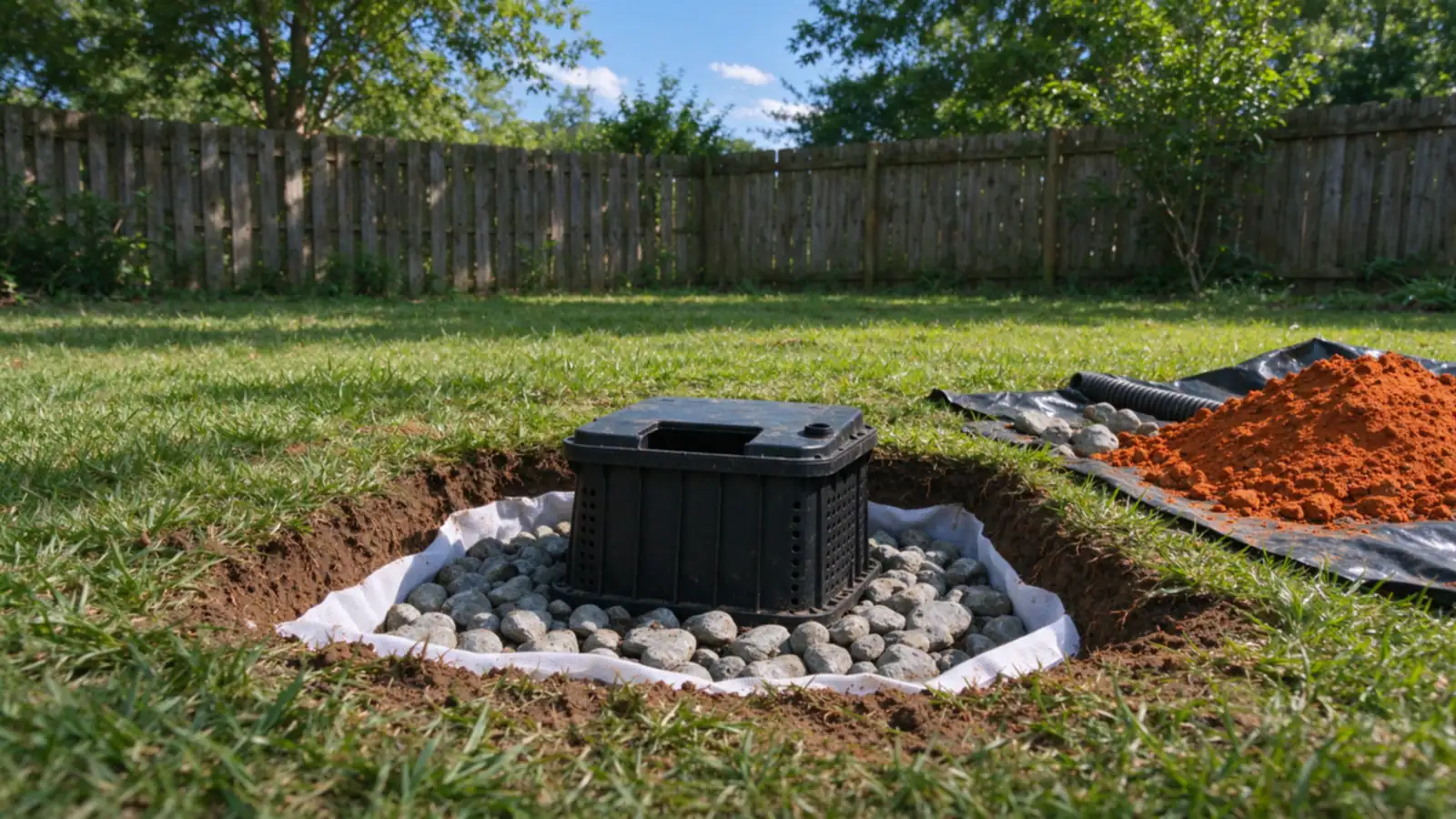
Amended soil around a shrub can admit rain more readily than the denser ground below it. Water then collects at the interface even though the loose material looks porous. The same mistake can be made on a larger scale by filling an excavation with stone and calling it a drain. The stone provides space; the route out determines how that space becomes available again. Ask whether the proposal depends on soil absorption, positive conveyance or a combination.
Choose for the full cycle
Consider three moments: water arrives, the feature is full and the storm has passed. At arrival, concentrated flow may need a protected entry. When storage fills, excess water needs a destination that avoids the house or neighboring property. Afterward, the soil must accept the stored water in time for the next event. Comparing only the size of a depression or chamber leaves out two of the three decisions.
Read the estimate against the finished property
Ask for a written boundary around a possible infiltration area beyond a roof downspout, including access rather than simply the length of the work. A price that assumes open access may change if limited access for excavation and removal of excess soil must remain usable. Separate excavation, material handling, connections and reinstatement where they affect your choice. If part of the route depends on groundwater, setbacks and the site’s demonstrated infiltration conditions, identify who will confirm it and when you can reconsider the scope.
Compare what you will see after a storm, not just what will be buried. A useful handoff identifies the collection point, the route and the receiving ground. Put the maintenance openings and any retained components on the same drawing. Keep it with photographs taken before backfill so a future fence, planting bed or patio does not compromise the work.
After the work
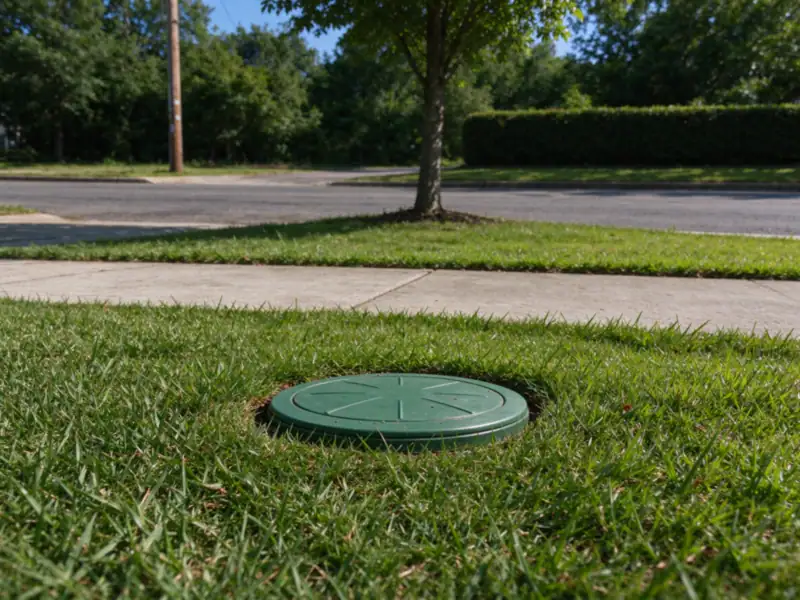
Ask how to identify a full system without entering an excavation or opening an unsafe cover. Keep the inspection and overflow locations on a drawing. If surface water returns after consecutive storms, the timing may indicate that stored water has not had a chance to leave. If runoff bypasses the inlet during a short shower, the collection detail may instead need attention. Record which condition you observed. Protect the footprint from later compaction, planting conflicts or digging that could change its function without leaving obvious evidence at the surface.
Questions about this decision
Will a larger dry well solve slow soil absorption?
More volume can postpone filling. It does not increase the soil’s ability to take water away quickly enough between events. Compare emptying time and overflow before increasing the chamber size.
Can a test near the surface prove the location works?
Surface conditions can differ from the soil at the proposed storage depth. Site-specific assessment also needs to account for groundwater and the ground beyond the test point.
What should the assessor check at a possible infiltration area beyond a roof downspout?
The immediate question is whether the soil can accept repeated inflow at the proposed installation depth. Follow the evidence from the upstream source to the proposed receiving area. If part of that route is concealed, ask how uncertainty affects the recommendation and whether a limited investigation could settle it.
How does the plan account for limited access for excavation and removal of excess soil?
Show that constraint during the site discussion. Compare access while work is underway with the finished condition. A proposal can restore drainage and still leave an awkward crossing if it only specifies the buried components.
What should I report if water remains in the system when the next shower begins?
Note when it occurred relative to rain or a change on the property. Record the proposed footprint, nearby buildings and overflow direction. A repeated pattern is useful evidence for checking the collection method and outlet before committing to more work.
Discuss your route
Tell Runwell about a possible infiltration area beyond a roof downspout, the result you want and any uncertainty about the outlet. Discuss your property or compare the items in a drainage estimate. For the two decisions most closely connected to this work, see How Does Clay Soil Affect Drainage in Durham? and Would a Rain Garden or Dry Well Suit My Yard?