Last Updated: November 5, 2026
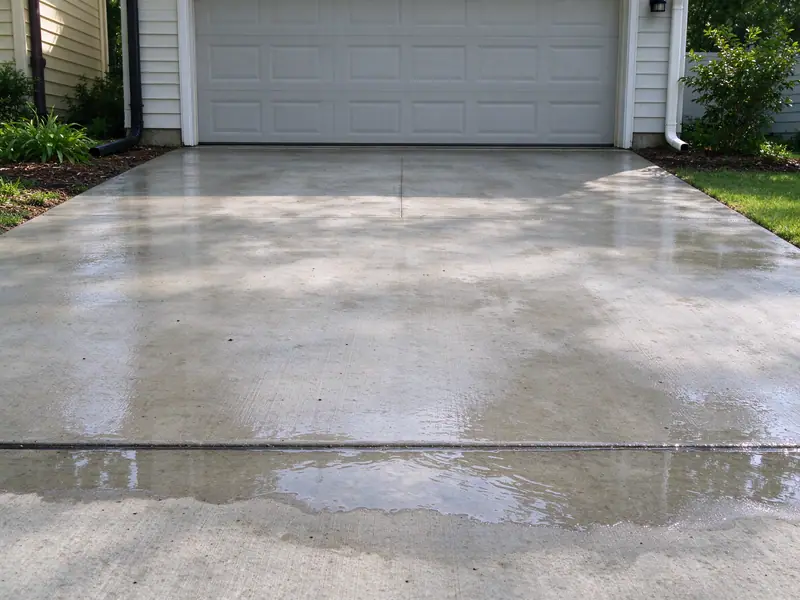
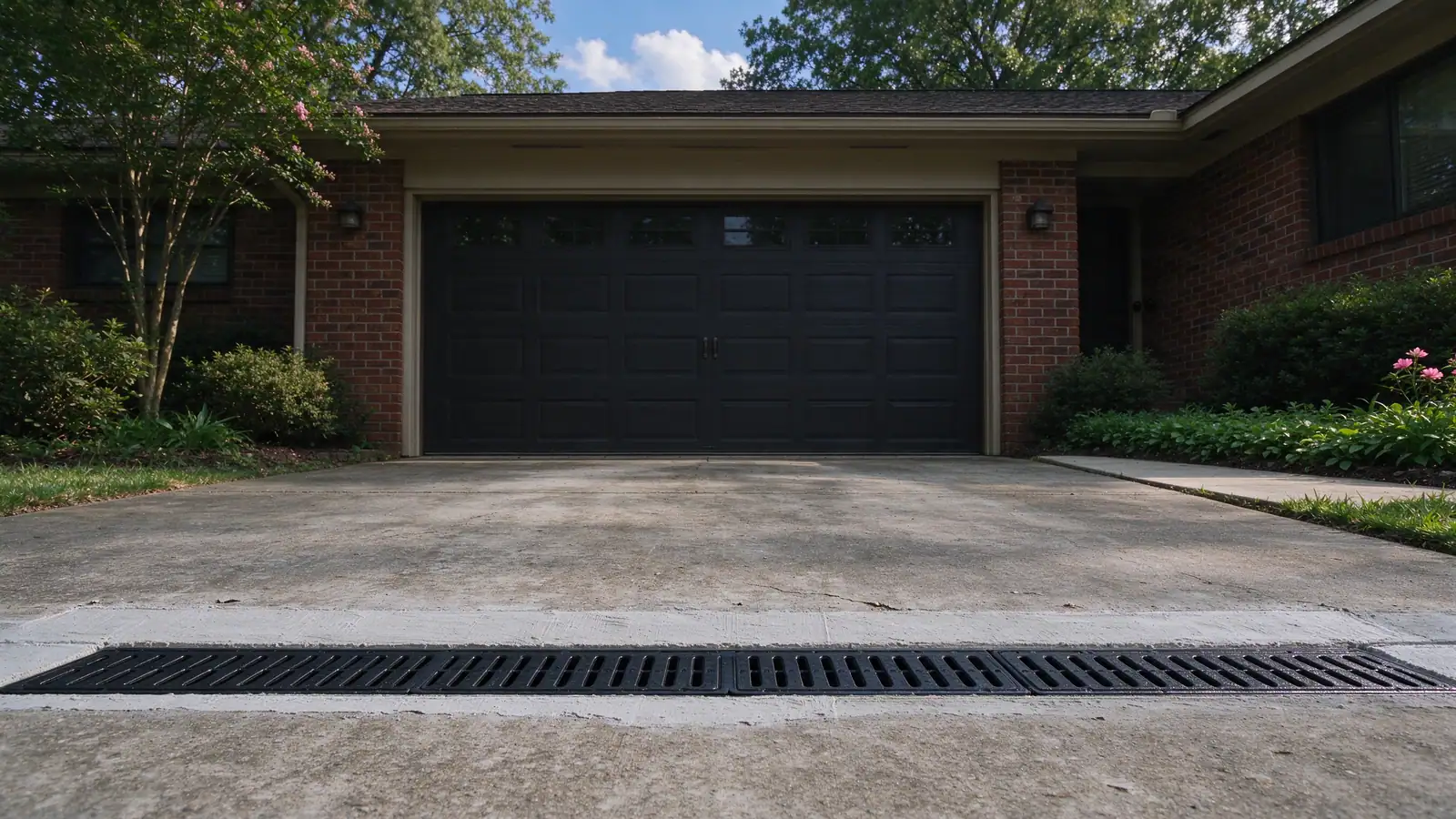
A line of water along a garage threshold has very little distance left to travel. A channel drain can intercept a sheet of runoff across the approach, provided the slab falls toward the grate and the collected water has somewhere lower to go.
Runwell Durham Drainage Company offers channel drain installation in the Durham area. The starting point is your intended result. If the immediate priority is to intercept runoff without introducing a trip edge, say so before comparing products or agreeing to excavation.
Read the line across the pavement
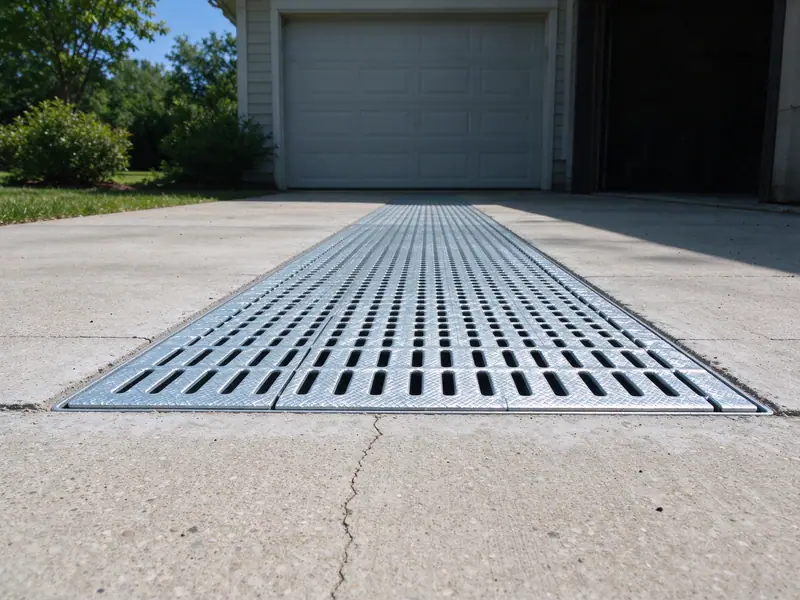
Set a straightedge across a sketch of the proposed channel. The upstream pavement must bring water to it along the full section that matters. A low corner beyond either end can carry runoff around the grate. At the garage side, the threshold must retain its protective level once the pavement and channel surround are finished. Compare those three lines before discussing grate style. A narrow grate may suit the appearance of the approach while still needing a substantial supporting detail underneath.
Two scopes worth comparing
Consider a property with a ribbon of water moving across a garage approach. Compare these alternatives.
- A continuous grated channel across the flow path.
- Correct the approach grade before it reaches the threshold.
The deciding question is whether water bypasses the ends or arrives underneath the threshold. Ask the assessor to show where each option would begin, what it would change and where its effect would end.
| What to compare | Why it matters here |
|---|---|
| Site evidence | Establish the available depth between finished paving and discharge level before fixing the route. |
| Everyday use | Protect turning tires near the garage door during construction and at the finished level. |
| Performance | Explain how the proposed work will help intercept runoff without introducing a trip edge. |
| Future care | Identify the accessible point where you can first notice a grate frame that rocks under a wheel. |
Choose for the wheel that crosses
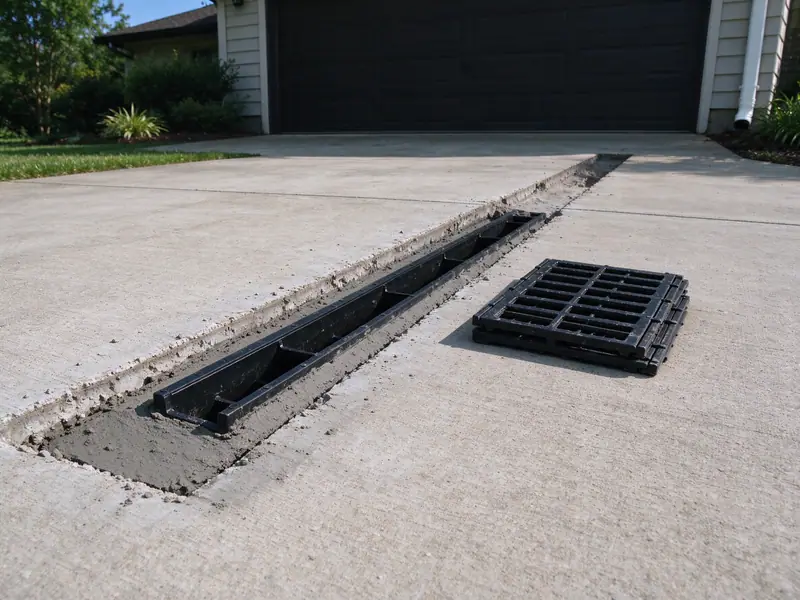
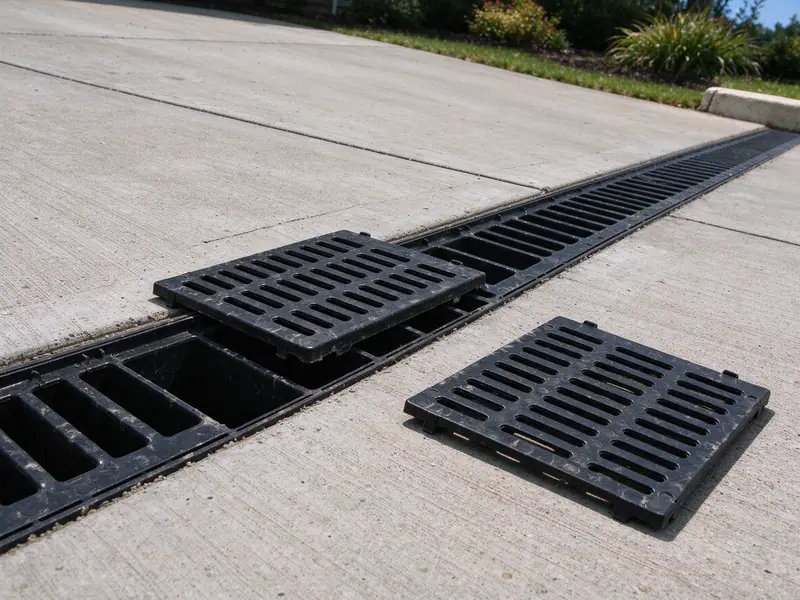
A channel serving a footpath and one crossed by turning vehicles face different loads. Ask for the frame, grate and surrounding installation detail together. A load rating on the cover alone does not describe how a wheel transfers force to the pavement. Include the route of delivery vehicles if they use the drive. Also ask how the grate is lifted later, which sections can be cleaned and where the discharge connection can be reached.
What to bring to the assessment
From a safe position, take a photograph showing the threshold, both ends of the proposed channel and the driveway slope. Mark the first place water arrives, even if the deepest puddle forms somewhere else. If you have a plan of a buried run, include the date and any later changes. A sketch of what you actually know is more useful than an apparently precise line drawn through an unverified section.
Mention it specifically if water curls around one end of the channel. That observation changes the question the contractor needs to answer. Ask which checks can be made from the surface and which would require opening a selected area or involving another specialist. Agree what happens if the first finding points away from the installation you initially had in mind.
Avoid the second cut
If the project involves resurfacing, agree on the ultimate paving height before fixing the channel. Otherwise a neat fresh overlay can leave the grate recessed too far or form a lip just upstream. Confirm who finishes the interface between the paving and channel work.
Write the blank lines yourself
Make one row each for collection, conveyance, outlet, access, soil disposal, finish and maintenance access. Put both estimates side by side and fill each row with what the contractor actually offers. Leave an item blank when it is unclear. A blank restoration row on the lower-priced proposal does not mean restoration is included at no cost. It is a question to resolve before deciding whether the totals are comparable.
Check what the finished ground will do
Ground that settles after backfill can alter support around a pipe. A flexible length can follow a poorly prepared bottom into an unintended dip. A rigid section spanning a void may also be poorly supported. Ask how the trench bottom, bedding and reinstatement will maintain the intended route. A neat strip of new turf gives little information about the condition of the assembly underneath.
Read the estimate against the finished property
Ask for a written boundary around a ribbon of water moving across a garage approach, including access rather than simply the length of the work. A price that assumes open access may change if turning tires near the garage door must remain usable. Separate excavation, material handling, connections and reinstatement where they affect your choice. If part of the route depends on the available depth between finished paving and discharge level, identify who will confirm it and when you can reconsider the scope.
Compare what you will see after a storm, not just what will be buried. A useful handoff identifies the collection point, the route and the receiving ground. Put the maintenance openings and any retained components on the same drawing. Keep it with photographs taken before backfill so a future fence, planting bed or patio does not compromise the work.
After the work
Before accepting the finish, look along the channel from one end to the other. The adjoining surface should feed the grate without an edge that catches a shoe or concentrates a wheel load on an unsupported corner. Identify the removable sections and outlet connection. If water later bypasses one side, note precisely where the bypass begins. A photograph along the approach can help distinguish a pavement-level problem from an outlet restriction. Those findings could call for quite different repairs, particularly on a drive where reopening a finished saw cut would be disruptive.
Questions about this decision
Does the channel have to span the entire driveway?
It has to intercept the part carrying water. A short grate can work where grades concentrate the flow, while a short grate across a broad sheet can leave an open path around each end.
Can the grate carry a vehicle?
Confirm the rating and installation details for the actual wheel loads. The support around the channel matters as much as the removable grate.
What should the assessor check at a ribbon of water moving across a garage approach?
The immediate question is whether water bypasses the ends or arrives underneath the threshold. Follow the evidence from the upstream source to the proposed receiving area. If part of that route is concealed, ask how uncertainty affects the recommendation and whether a limited investigation could settle it.
How does the plan account for turning tires near the garage door?
Show that constraint during the site discussion. Compare access while work is underway with the finished condition. A proposal can restore drainage and still leave an awkward crossing if it only specifies the buried components.
What should I report if water curls around one end of the channel?
Note when it occurred relative to rain or a change on the property. Record the threshold, both ends of the proposed channel and the driveway slope. A repeated pattern is useful evidence for checking the collection method and outlet before committing to more work.
Discuss your route
Tell Runwell about a ribbon of water moving across a garage approach, the result you want and any uncertainty about the outlet. Discuss your property or compare the items in a drainage estimate. For the two decisions most closely connected to this work, see What Should Be in a Drainage Estimate? and Is PVC or Corrugated Pipe Right for My Drain?